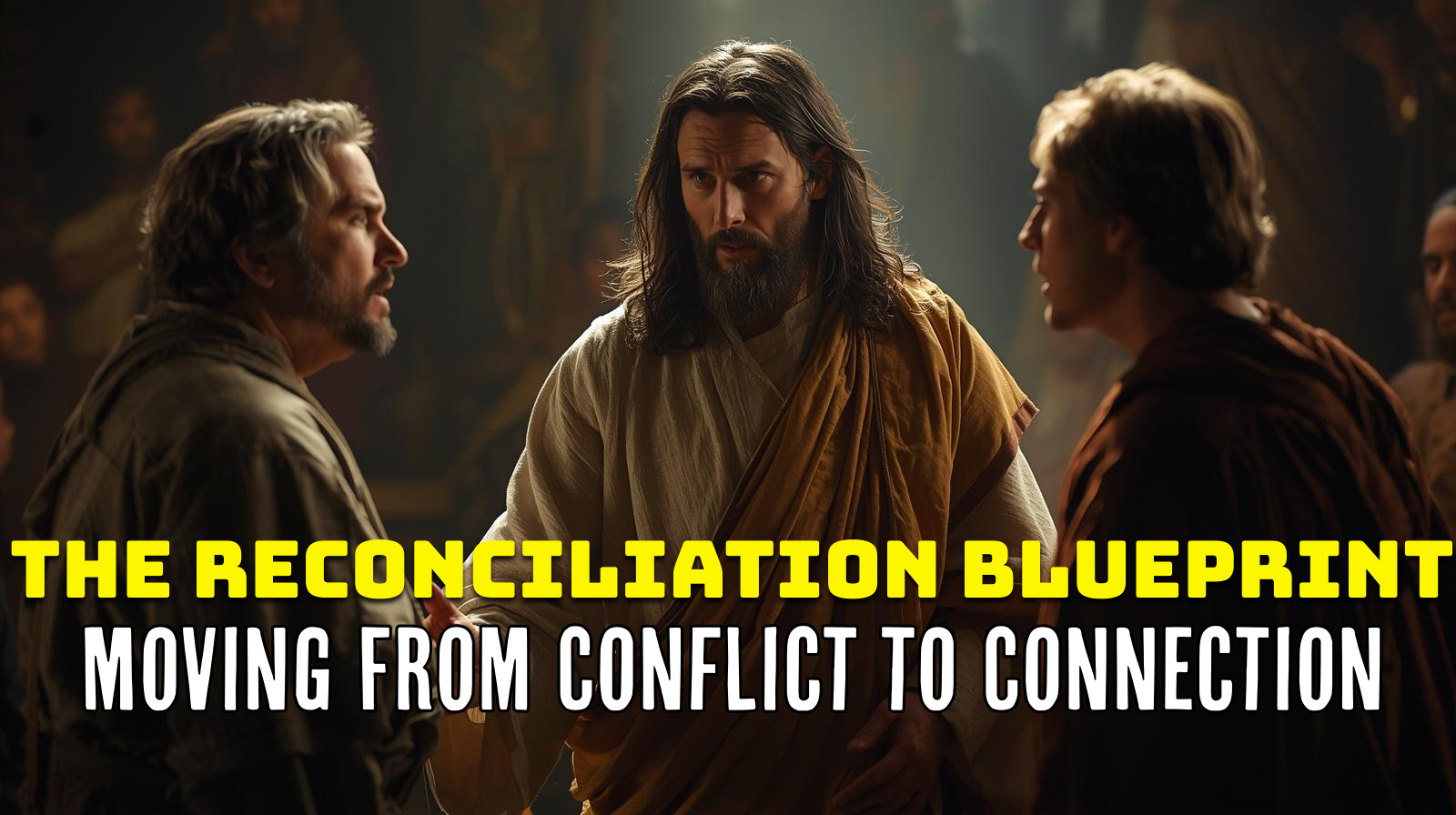
The Reconciliation Blueprint: Moving From Conflict to Connection
The Reconciliation Blueprint: Moving From Conflict to Connection
There is a heavy, suffocating silence that falls over a house in the aftermath of a bitter argument. You know exactly what it feels like. You are sitting in the same room, breathing the same air, perhaps even sleeping in the exact same bed as the person you love, yet you are separated by thousands of miles of icy, impenetrable emotional distance. When conflict strikes and our pride is wounded, the human ego immediately goes into a state of martial law. We retreat into the fortified bunkers of our own minds, pulling up the drawbridge and preparing for a siege. We engage in grueling, silent struggles, mentally rehearsing all the ways we were right, all the ways they were wrong, and stubbornly waiting for the other person to break first and apologize. We convince ourselves that holding our ground is a sign of strength, but this self-preservation tactic is a devastating illusion. The fortress of pride does not protect your heart; it starves it. It locks you into a profound, aching loneliness, severing the very connection your soul was designed to desperately crave. We would rather win the argument than save the relationship, and in doing so, we burn our own homes to the ground. But two thousand years ago, Jesus Christ delivered a radical, ego-shattering blueprint for human conflict. He taught us that true spiritual maturity is not found in never fighting; it is found in how quickly we are willing to drop our weapons, abandon our pride, and bleed for the sake of peace. And before we dive in, if this message is already stirring something in you, hit the subscribe button and stay connected to God's Word daily, because we believe that truth sets us free. Today, we are going to dismantle the devastating mechanics of human pride. We are going to explore seven biblical, incredibly practical steps to move from the freezing isolation of conflict back into the warm, life-giving light of true connection.
Number 1: The Agony of the Impasse (Recognizing the Fortress)
The very first step to moving from conflict to connection is aggressively confronting the lie of the impasse. In the hours or days following a fight, both parties often settle into a toxic standoff. We give each other the silent treatment, using our withdrawal as a weapon to punish the other person. We wait for them to realize how badly they hurt us. We wait for them to feel the exact same profound loneliness that we are feeling. We tell ourselves, "I made the first move last time; it is their turn."
This is the human ego operating at its absolute worst. The ego operates on a strict, transactional economy of fairness. It demands that the scales be perfectly balanced before any grace can be extended. But while you are waiting for fairness, the relationship is dying of starvation. The emotional distance is hardening into concrete. The silent struggles are turning into permanent resentment. You must realize that in the Kingdom of God, the person who initiates reconciliation is not the weaker party; they are the spiritually mature party.
To break the impasse, you must view the silence not as a weapon, but as an emergency siren. When the disconnection sets in, it is a flashing red light warning you that your relationship is taking on water. You have to be willing to look at the massive, fortified walls you have built and realize that they are trapping you in a prison of your own making. You must recognize that your desperate need to be "right" is currently costing you the person you love.
Number 2: Leaving the Gift at the Altar (The Urgency of Peace)
In Matthew 5:23-24, Jesus delivers one of the most terrifying, disruptive commands in the entire New Testament regarding conflict. He says, "So if you are offering your gift at the altar and there remember that your brother has something against you, leave your gift there before the altar and go. First be reconciled to your brother, and then come and offer your gift." Think about the staggering magnitude of this instruction. Jesus is prioritizing horizontal reconciliation over vertical religious performance.
We often try to bypass the messiness of human conflict by hiding behind our spirituality. We think we can ignore the massive emotional distance between us and our spouse, go to church, sing the worship songs, and be perfectly right with God. Jesus shatters this delusion. He says that your worship is completely unacceptable, your prayers are hindered, and your religious gifts are rejected if you are willfully maintaining a state of war with another human being. You cannot have a clear channel to heaven while you are simultaneously building a wall on earth.
This injects a terrifying, beautiful urgency into the reconciliation process. It means you cannot afford to wait for them to come to you. You cannot wait for the perfect moment or until you "feel" like it. You must drop your religious mask, walk away from the altar of your own pride, and make the agonizing, vulnerable trek across the room to initiate peace. The pursuit of connection must become more urgent to you than the preservation of your ego.
Number 3: Owning Your Debris (The Removal of the Log)
When we finally decide to break the silence and initiate a conversation, our flesh instinctively wants to start by pointing out everything the other person did wrong. We approach the reconciliation table like a prosecuting attorney, carrying a thick file of evidence. But Jesus provides a completely different blueprint in Matthew 7:5: "You hypocrite, first take the log out of your own eye, and then you will see clearly to take the speck out of your brother's eye."
In almost every human conflict, there is shared blame. Perhaps they were 90% wrong and you were only 10% wrong. The human ego demands that you focus entirely on their 90%. But the blueprint of Jesus demands that you take absolute, terrifying, unconditional ownership of your 10%. You must look at the wreckage of the argument and identify the debris that belongs to you. Did you raise your voice? Were you sarcastic? Did you jump to a false
conclusion
? Did you listen poorly?When you sit down to reconcile, you do not start with their failures; you start with your own. You say, "Before we talk about anything else, I need to apologize for my tone of voice. I was harsh, and I was wrong." This unilateral disarmament completely changes the spiritual atmosphere of the room. It drains the defensive poison out of the conversation. When you take the log out of your own eye, you invite the other person to step out of their own fortress and meet you in the light of vulnerability.
Number 4: Empathy Over Interrogation (Seeking to Understand)
Once you have owned your part of the mess, the next step is to completely abandon your need to be understood, and instead, fiercely seek to understand. When the other person begins to explain why they were hurt, our natural reflex is to interrupt, defend ourselves, and cross-examine their feelings. We interrogate their pain to prove that their reaction was illogical or disproportionate. This immediately triggers their defenses, and the massive walls of emotional distance slam right back into place.
If this message inspires you, don't forget to subscribe for more Bible insights every week. Empathy is the divine bridge over the chasm of conflict. Empathy means you shut your mouth, quiet your racing, defensive mind, and listen to their pain as if it were your own. It means you look for the wounded heart beneath their angry words. You say, "Help me understand why that made you feel so abandoned." And then you actually listen, without forming a rebuttal in the back of your mind.
You do not have to agree with their assessment of the facts to validate the reality of their pain. When someone feels truly heard and understood, the silent struggles that have been raging inside them begin to dissipate. Their nervous system calms down. The profound loneliness of being misunderstood evaporates. Empathy communicates the ultimate message of the Gospel: "I see your mess, I hear your pain, and I am choosing to stay right here with you."
Number 5: The Apology That Heals (Burning the "But")
The turning point of the reconciliation blueprint is the apology. Unfortunately, most of us have been trained to deliver fake, weaponized apologies that actually inflict more damage. The most toxic word in the English language during a conflict is the word "but." "I am sorry that I yelled, *but* if you hadn't provoked me, I wouldn't have done it." "I am sorry you felt hurt, *but* you are being overly sensitive." These are not apologies; these are counter-attacks disguised as repentance.
A true, biblical apology requires the absolute execution of the word "but." It is a naked, unconditional surrender of your pride. It is looking the other person in the eye and saying, "I was wrong. I hurt you. There is no excuse for my behavior, and I am deeply sorry." It is taking full responsibility for the impact of your actions, regardless of your original intentions.
Delivering an apology without a caveat feels like a mini-death. It feels like you are stepping up to the executioner's block and laying your ego down to be beheaded. And that is exactly what it is. The cross of Jesus Christ is the ultimate standard. You must put your pride to death so that your relationship can experience a resurrection. A pure, undefended apology is the holy water that washes the bitterness out of a wounded heart.
Number 6: The Currency of Forgiveness (Tearing Up the Ledger)
Reconciliation requires a response. If one person offers a true, naked apology, the other person must be willing to extend the expensive, gritty currency of forgiveness. When you are the one who was offended, your flesh will want to make them grovel. You will want to keep them on probation. You will want to hold onto the invisible ledger of their failure just in case they mess up again.
But Jesus commands us to forgive exactly as we have been forgiven by God (Ephesians 4:32). When God forgives you, He does not put you on a probationary period. He does not bring up your past sins at the next family gathering. He casts them into the depths of the sea. Forgiveness in the context of reconciliation means you make the agonizing, beautiful choice to tear up the ledger. It means you promise never to use this specific offense as ammunition in a future argument.
This releases the massive, suffocating weight of the past from the present moment. It clears the air. It allows both of you to breathe again. You are no longer debt collectors demanding payment from one another; you are two broken, desperate sinners standing on level ground at the foot of the cross, extending the exact same unmerited grace that saved your own lives.
Number 7: Rebuilding the Bridge (The Patience of Trust)
The final step of the blueprint is understanding the reality of the aftermath. Reconciliation is an event—it is the conversation, the apology, and the forgiveness. But rebuilding trust is a slow, methodical, and often messy process. After a severe conflict, the bridge between your hearts has been damaged. Even after you forgive, you might still feel the residual sting of the trauma. You might still battle fleeting moments of fear or insecurity.
This is where you must extend massive amounts of grace to one another. The emotional distance will not vanish overnight. You must be patient as the new dynamic is tested. If they get triggered, you do not attack them; you reassure them. You rebuild the bridge brick by brick, through consistent, faithful, observable changes in your behavior over time. You prove that your apology was not just words, but a genuine turning point in your character.
When a relationship successfully navigates the agonizing fire of conflict and the grueling work of the reconciliation blueprint, it emerges fundamentally transformed. The scars of the argument do not become a source of shame; they become the glorious, undeniable proof that your love was strong enough to survive the worst of your human egos. The profound loneliness is permanently cured by an intimacy that has been battle-tested and forged in the very grace of Almighty God.
Conclusion
We have examined the exact anatomy of moving from bitter conflict to beautiful connection. We have seen the urgency of leaving our gift at the altar, the necessity of removing the log from our own eye, and the power of prioritizing empathy over interrogation. We have learned to deliver the unconditional apology, to tear up the ledger of unforgiveness, and to patiently rebuild the bridge of trust.
If there is a silent, freezing war happening in your home right now, if there is a massive wall of pride separating you from someone you love, you are the one who must move. Do not wait for them. Do not let the sun go down on your anger. Step out of your fortress. Kill your ego before your ego kills your relationship.
Take the blueprint. Make the terrifying, vulnerable walk across the room, own your debris, and offer the extravagant, bloody, magnificent grace of Jesus Christ to the person standing in front of you. There is a resurrection waiting for you on the other side of your pride.
Before you go, make sure to follow and subscribe, like this video, and share it with someone who needs encouragement today. And join us next time as we uncover another powerful truth from God's Word.
Community Discussion
Please sign in with Google to share your thoughts.
No comments yet. Be the first to start the conversation!